Command An Army Tier List
Direct answerNine units are verified on this site, and this page ranks them editorial-style by their confirmed battlefield role — our judgement, not an official list, because the developer publishes no tier list. Last checked 2026-09-11. Per-unit star cost, rarity and pull rates remain unverified, so rank below is by role value, not by hidden numbers.
Tier criteria
- Combat performance — consistent impact in direct engagements
- Attack value — pressure enemy positions and break defensive lines
- Defense value — hold territory after a push
- Upgrade efficiency — long-term benefit from resources
- Team synergy — compatibility with mixed formations
Role tiers
| Tier | Army role | Best use | Upgrade priority |
| S | Main combat troops | Core attacks, frontline fights, major engagements | High |
| S | Reliable objective defenders | Holding important capture points, stopping pushes | High |
| A | Attack-focused troops | Offensive pressure, breaking defended positions | High |
| A | Reserve troops | Reinforce weak areas, enable counterattacks | Medium–High |
| B | Specialized counters | Specific enemy setups, tactical situations | Situational |
| C | Temporary / replacement roles | Fill gaps during early progression, rebuild after losses | Resource dependent |
Unit tiers (editorial)
Ranking of the nine units verified on this site, judged by their confirmed battlefield role — how reliably each contributes to pushing, holding and supporting inside the objective flow. This is our editorial judgement, not an official ranking: the developer does not publish a tier list, and third-party lists conflict with each other.
| Tier | Unit | Verified role | Why it ranks here |
| S | Mercenary | Melee body / main combat | Carries the core engagement and contests points in most battles |
| S | Shieldman | Shield unit / defensive hold | Holds captured ground and blunts pushes; pairs with Shield Wall |
| S | Crossbowman | Ranged / objective push | Ranged pressure that advances objectives — shown pushing Capture Point B |
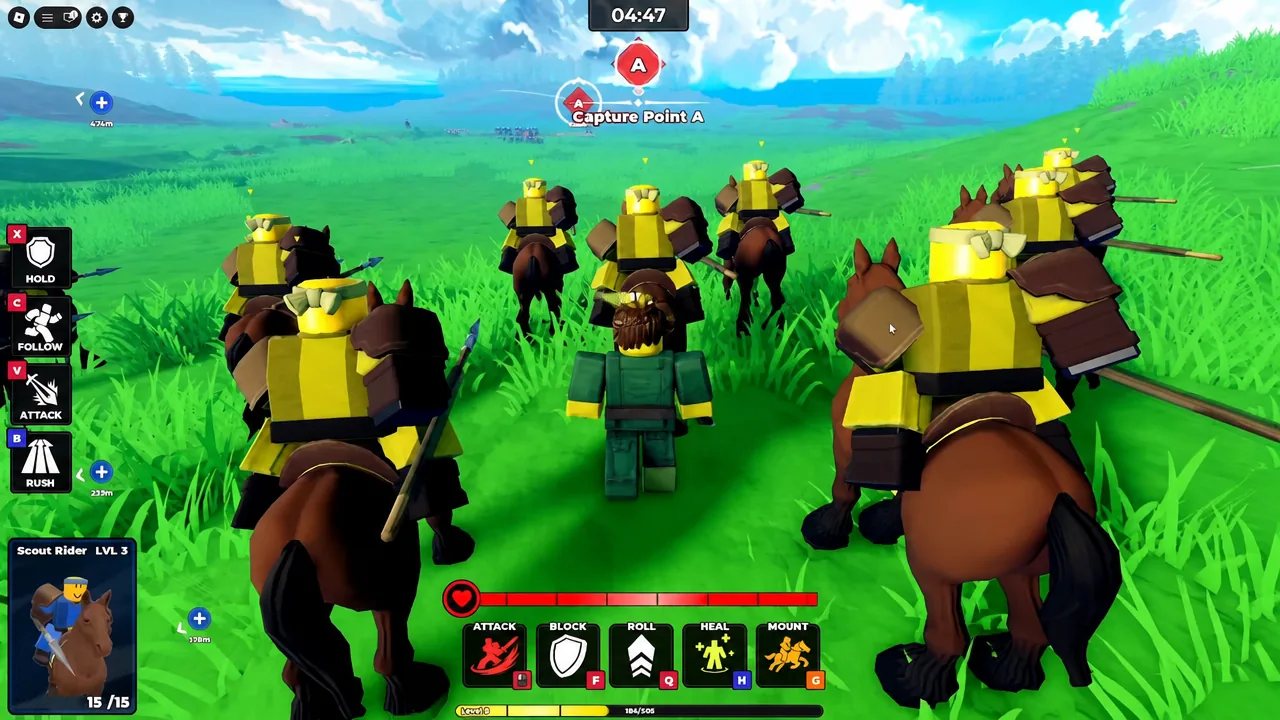
| A | Scout Rider | Mounted / fast charge | Mobility for concentrated charges; Triangle formation fits it |
| A | Spearman | Polearm / anti-cavalry body | Counter role against mounted units; solid starter body |
| A | Knight | Break structures / gate | Structure breaker shown in the tutorial; normal-match availability unverified |
| B | Archer | Ranged support | Reliable ranged support early; replace as stronger pulls arrive |
| — | Spartan / Immortal | Standard Banner pulls | Not ranked yet: their in-squad role is unverified, so evidence does not place them |
Other unit names circulate in third-party tier lists, and some of those lists add rarity and pull-rate numbers. We do not adopt them: no official rates are published, and we rank only units whose existence, role and acquisition we have verified.
Methodology & evidence
Two layers: an editorial ranking of the nine verified units, and a role-based framework for armies beyond that roster. Unit existence, roles and acquisition paths were verified from current sources at launch and re-checked 2026-09-11. The table is a starting point for army construction, not a substitute for observing the battlefield.
Frequently Asked Questions
Sources & Verification
- Command An Army Wiki — Tier List criteria (Community; states named roster unconfirmed) (community)
- Current gameplay guide — roles & formations (verified)
- Third-party unit tier list (Sep 2026) — referenced for contrast only; its numbers are not adopted (community)
- Command An Army Wiki — Unit upgrades priority guide (Community) (community)